
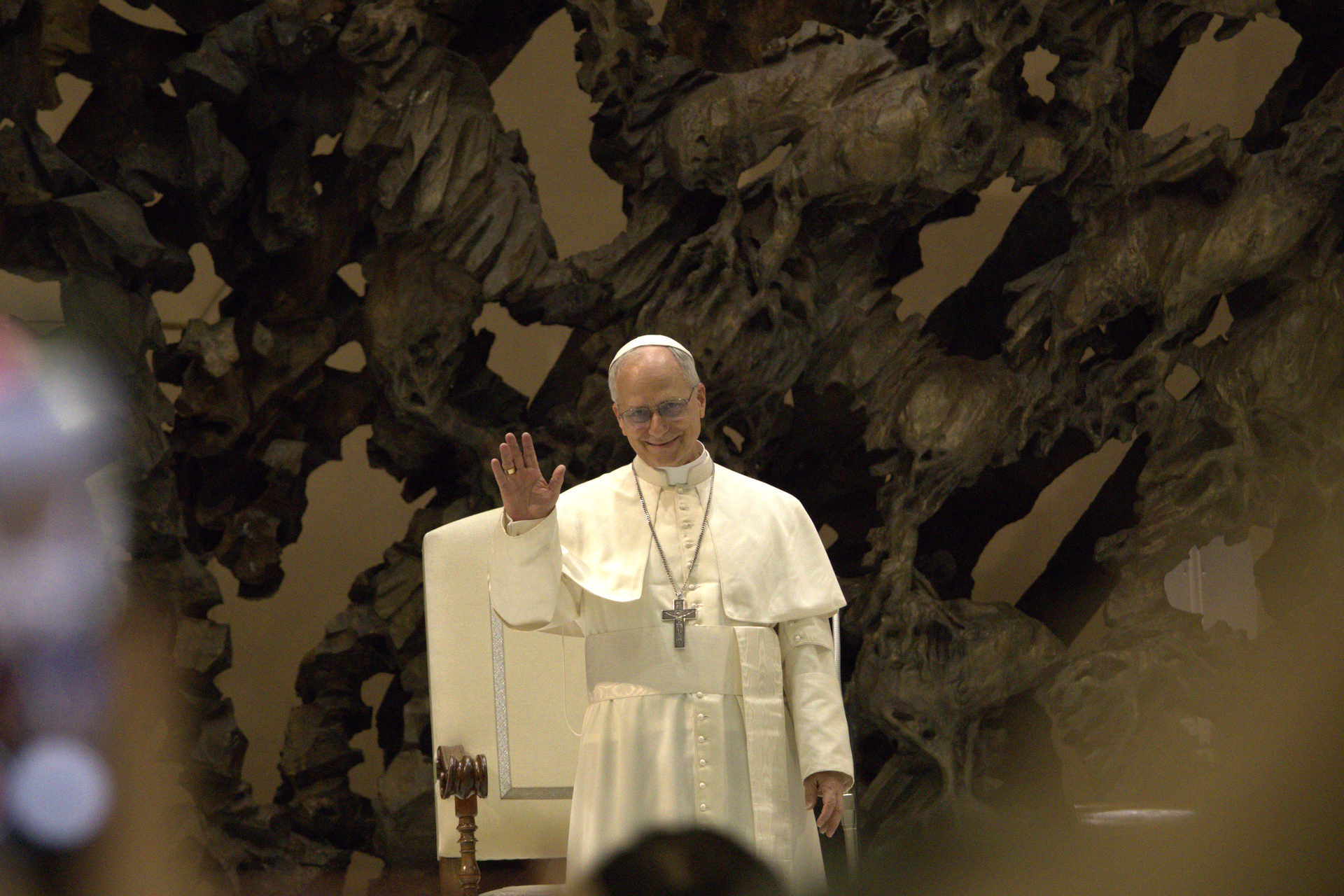
For a church accused of moving at a glacial pace, Pope Leo XIV just beat Silicon Valley, Washington, and the United Nations to the most urgent moral question of our time.
Magnifica Humanitas is not a critique of AI. It is a critique of humanity's view of ourselves. Because Pope Leo isn’t asking the world to consider simple questions of whether or not this new technology should be regulated, but, “Does AI make human life on earth ‘more human’ in every aspect of that life? Does it make it more worthy of [humanity]?” (MH, 129)
There is always an updated device, an updated platform, an updated tool, each promising greater efficiency and ease. And this logic is seeping into how we view ourselves.
We do not need technology to make up for our weaknesses; “humanity—in all its grandeur and woundedness— must never be replaced or surpassed.”
He goes on to speak of the abuse of humanity that takes place from this relentless pursuit, speaking of the communities whose drinking water is polluted from the unregulated expansion of data centers or the slavery of those charged with mining the essential minerals for our precious devices.
This wanton use of human life is the direct result of viewing ourselves as something to “be perfected,” when we view ourselves as such, “it becomes easier to accept that some lives are less useful, less desirable or less worthy” (117).
Once human worth is measured entirely by efficiency, exploitation becomes morally easier. Perhaps inevitable.
But when we pause to reflect on those core moments of our life, moments where we find deep meaning and joy, we realize that they were not created out of an idealized self-sufficiency, but through community.
He challenges us to grapple with the reality that “To eliminate suffering entirely would mean, in the end, extinguishing love and desire as well” (120).
This critique is not a call to abandon technology; rather, it is something the church, and by extension the world, should “embrace with gratitude and realism” (129).
For all the promises of technology made in the last 150 years, promises of an easier life and more free time, how much of that world has actually manifested?
Instead, we find ourselves pestered with Teams calls, buried in an endless string of disembodied emails, and surveilled by supervisors to make sure we are being “productive.”
The issue is that we are increasingly reshaping our lives to meet the demands of technological systems. These may be advancements, but they certainly are not making us more human.

The solution Leo gives us is not an answer, but an image. First, he speaks of the fable of the Tower of Babel. A great civilization, motivated by fear, sought to create stability, power, and make a name for themselves. They envisioned a uniform society that sacrificed the dignity of each person.
In contrast, he describes the rebuilding of the City of Jerusalem. The people return from exile, dismayed to see their city in ruins. But their leader, “did not impose solutions from above,” but listened to the people's needs and concerns, coordinated efforts, and addressed opposition (8). They didn’t just work to recapture some faded glory, but worked together to rebuild a common home. One sought to dominate, the other built a “fraternal coexistence” (9).
Leo is not calling for a revolution against AI; he’s inviting us to embrace our humanity. Yet, in the wake of the magnitude of the problems facing the world today—especially questions around AI—we are often left wondering, “But what can I actually do?” And this question is legitimate.
We were never meant to bear the weight of the world we live in. Human dignity survives in the stubborn act of caring for one another.
And Pope Leo knows this, so, quoting the wisdom of Gandalf from The Lord of the Rings, he invites each of us to something very simple:
“It is not our part to master all the tides of the world, but to do what is in us for the succour of those years wherein we are set, uprooting the evil in the fields that we know, so that those who live after may have clean earth to till.”
Justin Telthorst is the founder of Empty Chairs, an online community for Catholics who feel they don't fit the dominant mold of Catholic identity. He writes and speaks at the intersection of Catholicism and gritty humanity.