By Imogen Crump

Humans, as a species, have a track record of failing to learn from past mistakes — a tendency with the potential to end very badly in the frenzied evolution of artificial intelligence.

This is not a controversial statement or even, particularly, an insulting one. We do it repeatedly, across centuries, continents and an almost impressive variety of contexts. 

We are pattern-recognition machines who, when presented with a pattern we'd rather not recognise, will look directly at it and ignore it. We are masters of the phrase ‘unintended consequences’, as though the consequences were genuinely unforeseeable, when more often than not they were foreseen, named, published and waved away.

This essay is free as part of our launch series. Subscribe now to keep your access and see all of the great stories from The Almanor.

Subscribe Now

We do this in war. In 1919, the Treaty of Versailles was drafted in the aftermath of World War I with the stated ambition: to make industrial conflict of this scale structurally impossible. Twenty years later, same continent, same logic, same nationalist zeal and a body count triple the first war. 

We do this with our climate. In 1896, Svante Arrhenius published research stating that doubling atmospheric CO₂ would raise global temperatures by several degrees. In the 130 years since, our response has largely been to hold conferences, issue statements of grave concern and continue. 

We do this with genocide. After the Holocaust, humanity attempted to write "never again" into international law in the UN Genocide Convention of 1948. And yet: Cambodia. Rwanda. Srebrenica. Darfur.

Each arrived with its own chorus of disbelief: as though the previous horrors had been a different species' problem. 

This isn't stupidity, exactly. It's an allergy to inconvenient precedent, a wilful preference for the windscreen over the rear-view mirror.

We are, as a species, constitutionally optimistic about our own exceptionalism. This time is different. We are different. We know better now.

We don't, but we are very good at feeling like we do.

And now we seem to be doing the same thing with artificial intelligence; building pattern-recognition machines and marveling at what they can do, without pausing long enough to ask what they might undo.

And this brings me to cane toads.

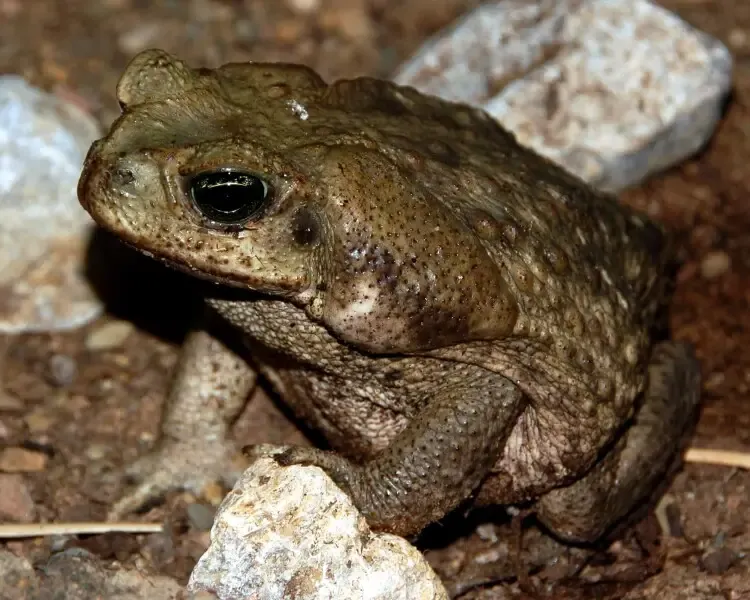
Now, if you’re outside of Australia (or even the vast state of Queensland) you may not be aware of the allegorical tale of the cane toad (Bufo marinus), which is somehow made worse by the fact that they are supremely ugly and smell like rotting bananas.

Early in the 20th century, Australia had a problem with native cane beetles that were devastatingly eating their way through the rapidly expanding major agricultural industry of (introduced) sugar cane crops in Queensland. 

It was an agricultural and economic problem that some of the best minds of 1935 turned their attention to. There were proposals of chemical fumigation, light traps, hand collections, alternative ploughing methods and other biological control methods.

But one entomologist, Reginald Mungomery – and yes, his name was Reginald, which somehow tells you something – who worked for the Queensland Bureau of Sugar Experiment Stations, landed on the cane toad as the answer to all of Australia's beetle ills.

Reginald decided this was an excellent plan, although there was next to no pre-release research. No study of potential environmental impact. Warnings from other prominent entomologists were received and, in the grand tradition, waved away. 

Nobody appears to have conclusively established whether the cane toad would actually eat the cane beetle.

Spoiler: it did not eat the cane beetle. The beetles lived at the top of the sugar cane. The toads could not jump that high. This was, in retrospect, quite important information.

Regardless, our Reginald travelled to Hawaii, captured 102 toads, bred them up and released them into far north Queensland. And so, he set in train one of Australia's most spectacular ecological disasters with the quiet confidence of a man who has never once considered that he might be wrong.

More than ninety years later, there are now an estimated 200 million cane toads in Australia, with populations expanding across the top half of the country at a rate of 40 to 60 kilometres a year, like an amphibious brown tsunami wiping out native animals, ecosystem structures and biodiversity in its wake.

Now Reginald was not a bad man. He was trying to solve a real problem. He just happened to be catastrophically, irreversibly wrong, and — more importantly — he waved away the many warnings.

Which brings us, with a strange sense of familiarity, to artificial intelligence.

AI is not a cane toad. This is not that kind of argument. But the pattern – the one we seem constitutionally allergic to recognising – is the argument.

We are, right now, releasing something into an ecosystem we don't fully understand, at a speed that precludes the kind of careful study that might tell us what we're actually doing. 

This essay is free as part of our launch series. Subscribe now to keep your access and see all of the great stories from The Almanor.

Subscribe Now

The warnings are published. The concerns are called out. And still, they are met with the same combination of excitement, economic incentive and selective hearing that sent Reginald to Hawaii with a toad trap and a plan.

The questions we're not asking loudly enough are the Reginald questions: Does AI actually do what we think it does? What does it displace? What are we not seeing because we're too focused on the problem we're trying to solve?

Because what we think we're releasing and what we're actually releasing are not always the same thing. 

Reginald thought he was releasing a solution. But he was releasing a problem that would outlast him by generations, spreading at a rate nobody predicted, in directions nobody anticipated, eating things nobody intended.

The cane beetle, for the record, is still there.

History doesn't necessarily repeat, but it does echo. And right now, if you listen carefully, you can hear something that might sound a lot like a distant croaking – getting closer, moving quickly, in every direction at once.

If there is a single lesson in our very long, very consistent history of not learning lessons, it is this: the croaking doesn't stop because you choose not to listen.

We have the opportunity not to be Reginald. You know how this goes. You've seen this before. You know what waving it away looks like.

Let’s not.

Imogen Crump is an accomplished journalist and editor, having produced and led major coverage events for the BBC, ABC, and now as the Editor of Pursuit at the University of Melbourne.

Editors: Cory Alpert, Haley Sprankle