In the late 1950s, white business owners in Atlanta thought themselves too busy to be afflicted by the violence that was streaking across the rest of the Jim Crow South.
They had imagined that the war they had silently condoned in their own financial interests would not one day sweep back to their doorstep, that a permanent underclass would always bear the brunt of the crisis of the day.
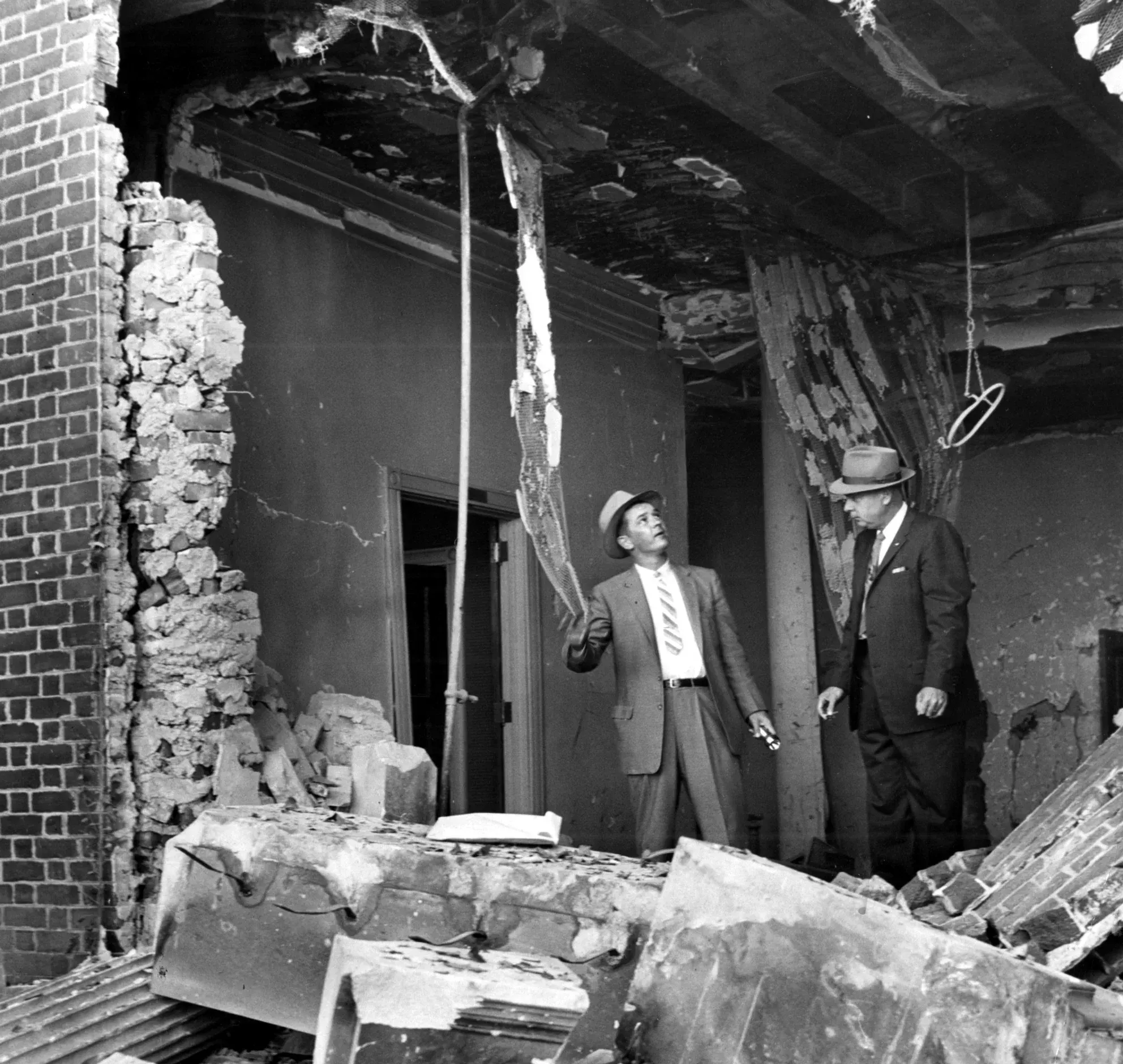
That mirage came to a halt in October 1958, when a bomb set by the Confederate Underground ripped through the walls of the Hebrew Benevolent Congregation’s temple at the northern end of Atlanta.
The congregation was led at the time by Rabbi Jacob Rothschild – an ally and friend of Martin Luther King, Jr. who used his pulpit to invoke holy indignation against the rule of violence against their Black neighbors whose independence from slavery had never been made complete.
Rothschild knew that attempts to build biracial political power had been met with violence. The memory of the 1898 coup in Wilmington, North Carolina, was still in living memory. Then, a fusionist government that saw power shared between the city’s white and Black communities was destroyed in a night by white supremacists who could not bear the thought that human beings in a democracy deserved to lead their own society.
And so the bomb tore through the walls.
The next Friday night, as his congregation gathered to welcome in Shabbat, to mark the exchange from the mundane of the week to the sacred of the new day, he gave a sermon entitled “And None Shall Make Them Afraid”.