
You learn to ignore the air raid sirens.
After a while, they’re just part of the background noise of the city, something that you only realize is happening for the first few days. After a while, you learn that the siren doesn’t always portend imminent danger. You check your Telegram groups, see if anyone outside is panicking, and go on about your day.
But there are nights that you know will be different. Rumors float around the city for days, lingering like stale air. Humor gets very dark in a warzone, especially when you’re talking about the looming inevitability of another strike. In a lot of ways, the anticipation is worse than the thing itself. You begin making your decisions, knowing that when the time comes, you won’t have the luxury to consider your options.
If it’s mostly a drone attack, you stay at home. Even in the most active places, hiding away in a corridor or bathroom will keep you safe. The Ukrainian military has gotten pretty good at knocking those drones down, to the point that your biggest risk is being hit by shrapnel, especially on the way to a shelter.
This essay is free as part of our monthly series. Subscribe now to keep your access and see all of the great stories from The Almanor.
For the last week, we’ve been wondering when it will come. The Russians have set up a massive missile called the Oreshnik, the kind of rocket that has the power to wipe us all out if things go bad in just the wrong way…In a way, it’s like one of the old great comets, a cosmic harbinger of some great change. But no one can ever be sure what that change will be.
When the missiles start flying, that’s when things get tricky. There’s not a lot you can do to survive those. When you know it’s going to be a long night of missile attacks, you start keeping an eye on how far the nearest shelter is. That’s your best bet to stay alive.
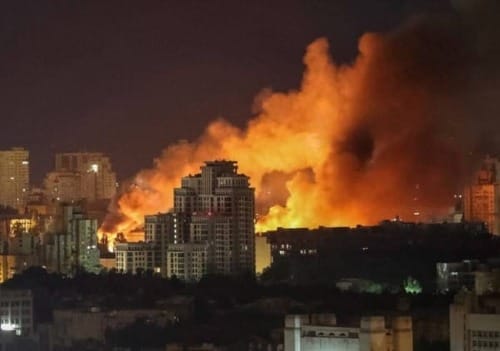
When you know what to expect, the sirens sound different. The wail isn’t so much a background noise as a reminder that this beautiful city sometimes lurches toward the frontlines.
And so you fall back on the decision you made the day before. You grab your bag with some snacks, a phone charger, and a sleeping bag. I have made the mistake on too many occasions of forgetting that, even in the middle of summer, the bunkers are well below ground and get very cold.
Once you get down there, it feels like a bit like everyone is in a waiting room for some kind of miserable audition or doctor’s visit. Families line the wall, trying to keep out of each other’s way. Down there, it’s just loud and cold, but you know that’s the worst that can happen to you. For the first hour, everyone is glued to their phones, watching the updates come in of where the rockets have landed.
This essay is free as part of our monthly series. Subscribe now to keep your access and see all of the great stories from The Almanor.
Those are perhaps self-inflicted psychological injuries, but they are unavoidable. Not to look feels like abandoning your humanity above ground. We all incessantly check messages about the damage. If it’s in our neighborhood, or if something was hit near where our friends live.
The barrage of information doesn’t stop. Dozens of Telegram channels report information by the minute, and you wonder how they even gather everything. You can tell when something important just happened when the volume of the shelter quiets down for a moment, information being passed along, trying to avoid a panic.
It usually takes about an hour for the news of the attack to reach my friends and family, who then start asking me if I’m okay. I have no way to respond to everyone, so I hope that an Instagram story will do.
After a while, it all becomes too much, and you have to put your phone away. You become resigned to the reality of the world above ground, that you have less than no control over what happens when you see daylight again.
Some people fall asleep, others do everything they can to distract themselves from whatever combination of the cold, the chugging of the escalator, or the thought of the war upstairs is keeping them awake.
But some people also decide not to go down to the shelter. Part of it is bravado, thinking that to change one’s life around the threat is to succumb to the goal of a terrorist. Sometimes you’ve simply run out of time, knowing that the worst place you can be during an attack is on the open street. Depending on how far you are from a shelter, that might be your safest option.
I once spent one of the strangest nights of my life on a friend’s balcony, eating chocolate and watching the drones fly overhead. The splatter of gunfire and rocket interceptors was the background music for existential questions about what my life will have meant if one of those comets decided to find me.
When you decide to stay on that balcony, you know that you are tempting fate, but you know that there isn’t much more you can do. If death comes for you, then there is nothing you could have done.
Then at some point, things start to quiet down. This is no longer a war of relentless terror, of fleeing from an invading army. For the most part, life allows itself to settle into a rhythm. The bombs stop falling, and you can go up for air.
After this last attack, around 4:30am, I spent 15 minutes hiking up the frozen escalator. They only turn them on to go down into the shelter, so excavating yourself is a physical effort that requires healthier lifestyle choices than the war often allows. I got up to the entrance and poked my head out to see if things were safe.
Within two minutes, I hear the unmistakeable whir of the Russian drone, not far from being directly above my head. Then the gunfire that our protectors use to bring it down, then the explosion when the laws of gravity take over. I watched the plume of smoke rise up and decided I would be better off going back down that escalator and dealing with that later.
This essay is free as part of our monthly series. Subscribe now to keep your access and see all of the great stories from The Almanor.
An hour later, the all-clear was given, and we started to pack up our temporarily relocated lives. Everyone walked through the rain, just awake enough to get home, but not yet coherent enough to survey our surroundings for damage. So long as there were no bombs in our path, it would be okay.
The lucky among us go back to sleep. Most people have to peel their eyes open and go back to work. The war ceased to be an excuse for most jobs a while ago, it is simply a lived reality that must be adapted to.
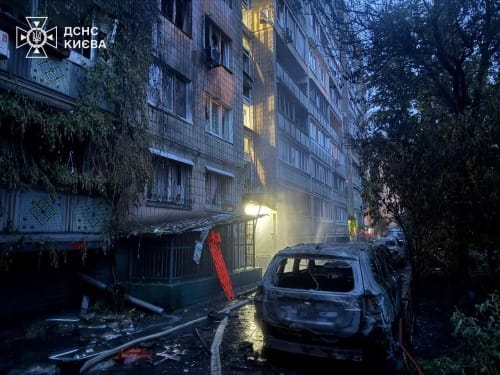
In the minutes and hours that come with the sun’s re-emergence, the damage becomes clear, but so too does the need for life to carry on the next day. Soon, the flower-selling grandmothers will be back on their claimed corners. Kids on summer vacation will skateboard up and down my street. The gap between shock and the resumption of normal life gets shorter with each attack. Life has to find some way to carry on.
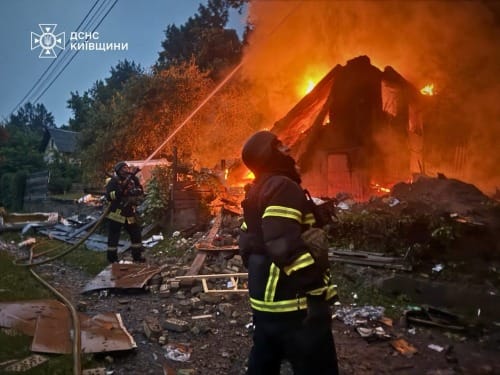
Writers in conflict zones across time and space always remark on the resilience of the people there. This is not the compliment we all imagine. No one here wishes to be in a city or a country that is constantly under attack. But to leave is to admit defeat. Life finds a way to adapt and you learn to accept it as a risk.
For those of us lucky enough to grow up in places where such conflict is invisible and unimaginable, we cannot imagine this as anything other than defiance and resilience. But here, as in most other places haunted by the failures of weak men, to continue living is not a conscious decision. This place is their home. To be amazed that people continue living here is to be amazed that people continue breathing. It is a reflex.
I do not pretend to know the answers to this conflict. It is as one-sided and cruel as they come, and yet it seems that there is endless appetite from the Kremlin to inflict pain and suffering.
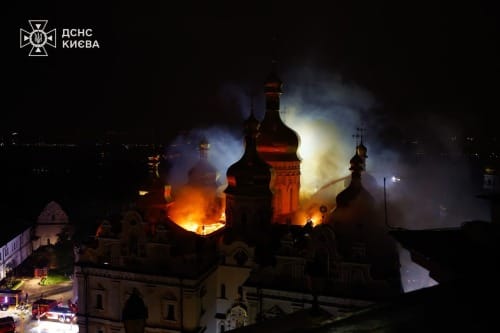
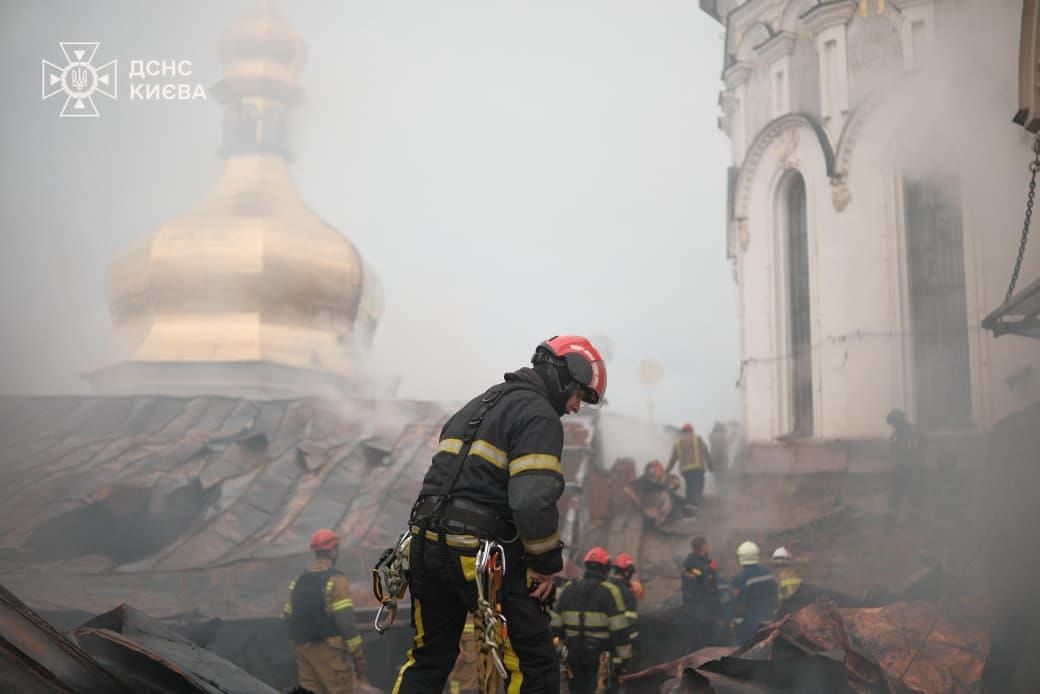
Last night, they hit the Pechersky Lavra, a monastery that stood for a millennium. The damage was partial, it will be back soon. But like everything else that gets visited by war – people, buildings, streets – nothing makes it through the other side unscathed.
There is a part of me that wants to loudly call for the end of all war. But who am I to tell someone who has seen their entire life go up in flames that they are not owed some kind of violence?
Princess Olha burned down half of the city after her husband was slain. If there is one thing that humans cannot contain, it’s our desire for revenge. I am not excusing it, but after a few too many mornings emerging from a shelter to see another scar emerged, I understand it.
This essay is free as part of our monthly series. Subscribe now to keep your access and see all of the great stories from The Almanor.